
Live on Cardano Mainnet · 220 blocks minted

Stake your ADA with GRADA. Zero margin, since 2021.

A Swedish Cardano stake pool, self-hosted on hardware we own in Malmö0% margin, running every epoch since 2021, with figures you can verify on-chain. Your ADA never leaves your wallet.

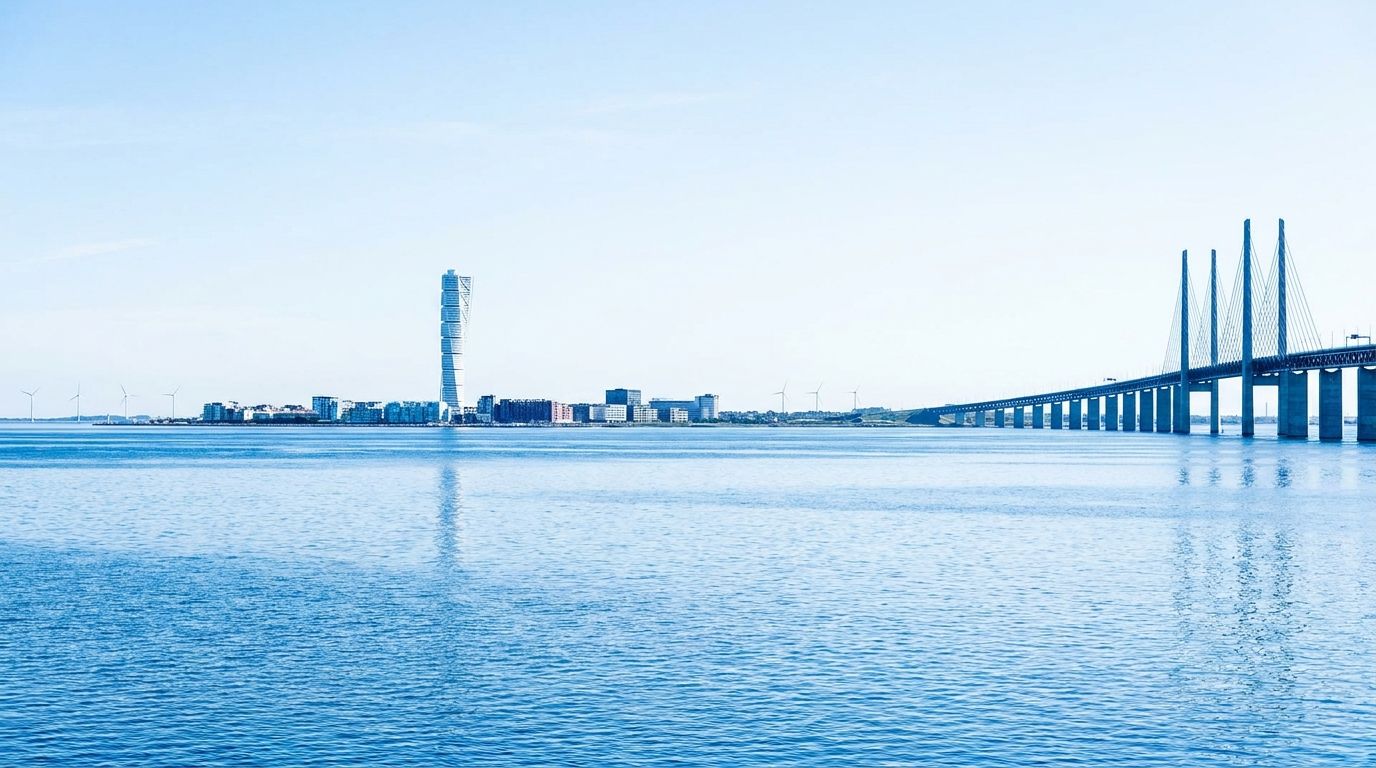
The Öresund strait at Malmö on a bright day, with the Turning Torso tower on the skyline and the Öresund bridge crossing to the right Operated from Malmö, Sweden
759.2k ₳
Live stake
110
Delegators
220
Blocks minted
0.98%
Saturation
0%
Margin
Live figures for the GRADA Mainnet pool, read from the Koios on-chain API
Why GRADA

A pool run like production infrastructure.

GRADA is not a hobby node on a rented VPS. It runs on enterprise hardware we own and operate ourselves, in our own datacenter, by someone who has kept servers online since 1996.

0% margin — permanently

We take no percentage cut of your rewards. The only operator income is Cardano's protocol-enforced minimum fixed cost of 170 ₳ per epoch, deducted from the pool's rewards before distribution — never from your wallet.

High availability

Redundant power, redundant networking and hands-on monitoring in a Swedish datacenter. Nodes are watched around the clock so problems get caught before they cost a block.

Security as daily practice

Cold keys stay off internet-facing machines, KES keys rotate on schedule, three separate firewalls guard the perimeter, and everything is patched and backed up to current best practice.

Energy-conscious by design

Cardano's proof of stake needs a rounding error of Bitcoin's energy, and we run low-consumption servers on top of that. Staking here costs the planet close to nothing.

Hosting since 1996

Three decades of running servers and websites with close to 100% uptime — long before blockchain existed. Cardano is simply the newest workload on a very old discipline.

Well below saturation

Rewards only scale with pool size up to the protocol's cap. GRADA sits far under it, so nothing you earn here is diluted — and your stake helps decentralise the network.

3 servers
Dedicated machines in our own datacenter
~20 nodes
Virtualized Cardano nodes across all networks
384 GB
RAM — deliberately oversized
32 CPU
Cores available to the node fleet
24 TB
SSD RAID storage
3 + 3
UPS units and firewalls, for power and perimeter
Networks

We run the future of Cardano before it ships.

GRADA produces blocks on Mainnet — and on every public testnet where Cardano's next version is being proven. When an upgrade reaches Mainnet, we have already been running it for months.

Mainnet · real ADA LIVE

GRADA on Mainnet

Producing blocks since 2021 at 0% margin. Every figure below is read live from the chain — not typed in by us.

759.2k ₳
Live stake
110
Delegators
220
Blocks
0.98%
Saturation
Pool ID
pool1gf8a46j6hvhad8e48hez4084x34snpua8k7t3kzy9w42q6w60z8
  • 0% operator margin — for good
  • 170 ₳ protocol minimum fixed cost per epoch
  • Since 2021 on the same self-hosted stack
Testnets ALL LIVE

Four networks ahead

Most operators run Mainnet only. We run the whole pipeline, so Cardano's upcoming releases meet our stack long before your ADA does.

  • PreProdMirrors Mainnet exactly — the last gate before release.
  • PreViewFast 1-day epochs for testing what lands next.
  • SanchoNetCardano's on-chain governance (Voltaire) proving ground.
  • LeiosThe Musashi devnets — next-generation throughput research.
Operator

One operator. Thirty years of uptime.

A stake pool is only as trustworthy as the person behind it, so here is exactly who that is.

My name is Tommie, and I have worked in IT for over 30 years — hosting servers and websites since 1996 with close to 100% uptime. My background is financial: I trained in finance and built systems for accounting firms, then spent the following decades as Head of Development, Chief Development Officer and Business Developer at companies including Story House Egmont, Biltema and Sopra Steria.

Today I am Research & Development manager at ASSA ABLOY, leading a team of more than 25 developers working on access, security and cryptography. My teams have built payment integrations across the Nordics — Klarna, Swish, PayPal, Nets, Vipps, MobilePay, Autogiro and more — for systems serving roughly 4.4 million customers and around €50 million in annual turnover. GRADA runs to the same standard I hold that work to.

30+
Years in IT
System development, engineering leadership, cryptography and access security.
25+
Years hosting
Servers and websites online since 1996, with close to 100% uptime.
25+
Developers led
R&D team at ASSA ABLOY building access and security solutions.
2021
Pool since
GRADA has been forging blocks on Cardano Mainnet since 2021.
Delegate

Staking in three steps.

Delegation is non-custodial: your ADA stays in your wallet, stays spendable, and is never locked. You are only pointing its stake weight at a pool — and you can change your mind at any time.

1

Get a Cardano wallet

Any major wallet works. Install one, create your wallet, and back up the recovery phrase offline — never share it with anyone, including us.

LaceEternl DaedalusYoroiVespr
2

Find GRADA

Open the staking tab and search for the ticker GRADA — or paste the pool ID from the card above for an exact match.

3

Delegate & earn

Confirm the delegation. It costs one small network fee (~0.17 ₳) plus a refundable 2 ₳ deposit the first time you register. Rewards then arrive automatically every epoch and compound on their own.

Meet our sister pool: AIADA

AIADA is our AI-operated Cardano pool, running on the same hardware, in the same datacenter, under the same 0% margin promise — but with the day-to-day operations driven by an AI agent. Same philosophy, different experiment.

Visit aiada.io ↗
FAQ

Questions, answered.

What is ADA staking?
Staking means delegating your ADA to a stake pool such as GRADA, which produces blocks on the Cardano network on behalf of the stake delegated to it. Think of it as joining a mining pool — except you need no hardware, no expensive GPUs and no technical knowledge. GRADA runs the machines; you keep your ADA in your own wallet and simply point its stake weight at the pool. Rewards are paid out automatically by the protocol every epoch.
There's a catch, right?
No catch — this is exactly how Cardano is designed to work. Delegation is what secures and decentralises the network, so the protocol rewards ADA holders for taking part. Rewards are minted by the protocol, not taken from other delegators, and GRADA adds 0% margin on top. Rewards vary by epoch and depend on network-wide parameters and the pool's luck in the block lottery — no operator can promise you a fixed return.
Is my ADA safe when staking?
Yes — completely. Delegation on Cardano is non-custodial: your ADA never leaves your wallet, is never locked, and stays spendable at all times. Cardano addresses hold separate keys for spending and for staking, so a stake pool can never move, freeze or access your funds. You are only delegating your stake's weight, and you can re-delegate or stop at any moment with no lock-up and no exit penalty.
Should I stake my ADA?
Staking is a core part of what makes Cardano work. Stake pools are the backbone of a decentralised network, supporting the mechanisms that keep it healthy and live, and delegation lets you support that — and earn rewards — without running a node yourself. Since it carries no lock-up and no custody risk, undelegated ADA is simply ADA doing nothing. This page is information, not financial advice.
Contact

Questions? Just ask.

There is no support ticket queue here — you reach the person who runs the servers.

Email
Usually answered the same day.
Phone
Swedish office hours (CET).
Address
Carlsgatan 35
Malmö, Sweden